What Pages Does a Therapist Website Actually Need?

If you're planning your therapy website, one of the first things you'll need to decide is what pages to include.
A homepage, obviously. An About page seems sensible. You'll need somewhere to explain your services and tell people how to contact you. But what about a separate fees page? FAQs? A blog? And do you need an individual page for every type of therapy you offer?
It's surprisingly easy to turn what should be a fairly straightforward decision into a website with fifteen pages before you've written a single word.
So, how many pages does a therapist website actually need?
Most therapy websites need five main types of information: a homepage, an About page, details of the services offered, practical information such as fees, and a way to get in touch.
But that doesn't necessarily mean you need five separate pages.
The right website structure depends on your practice, the services you offer and what someone needs to know before deciding whether to contact you.
Let's look at what each page is actually there to do.
The essential pages for most therapist websites
Before getting into individual pages, I want you to think about your website from a slightly different perspective. When you're building your own website, it's natural to focus on what you want to tell people about yourself and your practice.
But someone visiting your website is approaching it from the other direction.
They may be looking for a therapist for the first time. They might have several websites open, trying to understand the differences between practitioners. They may not even know what type of therapy they're looking for. They're trying to work out whether you might be the right person to help them.
I call this looking at your website through the Potential Client Lens.
Rather than asking, 'What pages should I have?', start by asking, 'What does someone need to understand before they can decide whether to contact me?'
That changes how you think about your website structure. Each page should have a purpose, and the information should be where someone would reasonably expect to find it.
Here's how that works in practice.
Home
Helps someone understand whether they're in the right place.
About
Helps someone get to know you and what working with you might feel like.
Services
Explains what you offer and who you work with.
Fees and practical information
Helps someone understand what sessions involve and whether the arrangements suit them.
Contact
Explains how to enquire and what happens next.
1. Your homepage: Help people understand they're in the right place
Your homepage is usually where someone gets their first impression of your practice. Its job isn't to explain absolutely everything about you or squeeze the entire contents of your website onto one page. It's to help someone quickly understand what you offer, who you work with and whether it's worth exploring further.
Think about someone arriving on your homepage after searching for a therapist.
They shouldn't have to read three paragraphs about your passion for helping people before discovering whether you offer online counselling, where you're based or what you specialise in.
Those are often the things they're looking for first.
What should your therapy homepage include?
For most therapists, I'd recommend including:
A clear introduction explaining what you offer and who you help.
Your location and whether you offer online or in-person sessions.
A brief overview of your services or specialisms.
A short introduction to you as the therapist.
Links to the pages where visitors can learn more.
A clear way to make contact or find out about the next step.
You don't need to explain every detail here.
For example, if you offer counselling for anxiety, your homepage might briefly explain that you work with adults experiencing anxiety, worry or overwhelm, then link to a page with more information about your approach.
That gives someone enough to recognise whether your work might be relevant without making them read everything at once.
Your homepage should help people find their way around your website, not make the rest of your pages redundant.
2. Your About page: Help potential clients get to know you
Therapy is personal.
Someone choosing a therapist isn't simply comparing qualifications or looking for the nearest available appointment. They're also trying to get a sense of the person they might be talking to.
That's why your About page matters.
But it's also why an About page that's essentially a professional CV can feel a little disconnected from what a potential client wants to know. Your qualifications, training and experience are important. They help establish credibility and give people information about your professional background.
They're just not the whole story.
What should a therapist About page include?
Your About page might cover:
Who you are and your professional background.
Your qualifications and relevant experience.
Your therapeutic approach, explained in understandable language.
What it's like to work with you.
The values or principles that inform your practice.
A photograph of you, if you're comfortable including one.
A natural next step for someone interested in working together.
You don't need to share your entire personal history or explain why you became a therapist unless that information genuinely helps someone understand your work. And you certainly don't need to manufacture an inspiring origin story because someone on the internet told you every business needs one. The aim is to help someone get a clearer sense of you as a professional and a person.
For example, rather than simply listing that you're an integrative counsellor, you could explain what that means for someone considering therapy with you.
How do you approach sessions? What can someone expect? How do you work together?
Your About page should help answer the question: 'Could I imagine talking to this person?'
Not everyone will decide you're the right therapist for them, and that's okay. The point is to give them enough genuine information to make that decision.
3. Your Services page: Explain how you work and who you help
Your Services page is where you can explain what you offer in more detail.
For some therapists, this will be straightforward. You might offer individual counselling for adults, with sessions available online or in person. For others, there may be several services to explain, such as individual therapy, couples counselling, supervision or different areas of specialism.
Either way, your Services page needs to help someone understand whether what you offer is relevant to them.
What should a therapy Services page include?
Depending on your practice, you might explain:
The type of therapy you offer.
Who you work with.
The difficulties or experiences you support people with.
Your therapeutic approach and what it means in practice.
Whether sessions are online, in person or both.
How sessions are arranged.
Where someone can find fees and further practical details.
How to enquire about working with you.
One thing I'd be careful about is relying too heavily on therapy terminology.
You might understand exactly what person-centred, psychodynamic or integrative therapy means. Someone who's never had therapy before may not. That doesn't mean you need to avoid professional terminology altogether. It means you should explain it in a way that helps someone understand what working with you might involve.
The same applies to specialisms. A list of 'anxiety, depression, trauma, relationships and self-esteem' tells someone which subjects you work with. But it doesn't necessarily help them understand how you approach those difficulties or whether your experience is relevant to their situation.
Your Services page is an opportunity to provide that extra context.
And if you offer several different services, you may need more than one page. We'll come back to that shortly.
4. Fees and practical information: Answer the questions that affect someone's decision
This is one of those areas that can seem less interesting than the design of your homepage or the wording of your About page.
But practical information matters.
Someone considering therapy may be trying to work out whether sessions are affordable, whether they can attend at a suitable time or what happens after they make an enquiry. If they can't find that information, they're left guessing.
And you don't want someone to have to send an email just to discover something you could have explained clearly on your website.
What practical information should your therapy website include?
Depending on your practice, this might include:
Your session fees.
Session length.
Whether you offer online or in-person appointments.
Your location, where relevant.
Availability or working hours, if you choose to share them.
Payment arrangements.
Cancellation information.
Whether you offer an initial consultation.
What happens after someone makes an enquiry.
You don't necessarily need a separate page for all of this.
If you offer one service with a straightforward fee structure, the information might sit comfortably on your Services page. If you offer several services with different fees or arrangements, a dedicated Fees and FAQs page might make more sense.
The important thing is that the information is easy to find.
And don't overlook the less exciting but necessary website information, such as an appropriate privacy notice. What you need will depend on how your website collects and handles personal information, so make sure your website's legal and privacy information is suitable for your practice.
Practical information isn't an afterthought. It's part of helping someone make an informed decision about contacting you.
5. Your Contact page: Make the next step clear
Someone has read about you, explored your services and decided they'd like to enquire.
Now what?
Your Contact page should make that next step straightforward. It sounds obvious, but a contact page can create unnecessary uncertainty if it doesn't explain how to get in touch or what happens afterwards. For someone considering therapy, making that initial enquiry may already feel like a significant step.
Your website doesn't need to make it more complicated.
What should your therapist Contact page include?
I'd recommend considering:
A clear explanation of how someone can contact you.
Your preferred contact method, such as an enquiry form or email.
Any relevant information about current availability.
What someone can expect after submitting an enquiry.
Your location, if you offer in-person sessions.
Any important information about the purpose and limitations of the contact form.
If you use an enquiry form, think carefully about what information you actually need at this stage.
Do you need someone to provide a detailed account of their difficulties before you've even had an initial conversation? Probably not. Ask for the information necessary to respond appropriately, and consider the privacy implications of collecting sensitive personal information through your website.
It's also worth explaining what happens next. Will you reply by email? Do you usually arrange an initial conversation? Is there something the person needs to know before enquiring? You don't need an elaborate process.
You just need to make the next step understandable.
When do you need separate pages for different therapy services?
This is where the answer becomes more individual.
Let's say you're a counsellor offering one-to-one therapy for adults, and you work with people experiencing anxiety, relationship difficulties and low self-esteem. Do you need three separate pages? Not necessarily.
If your work with those difficulties follows a similar approach, you may be able to explain everything clearly on one Services page.
But imagine you offer individual counselling, couples therapy and clinical supervision.Those are distinct services, with different audiences and potentially different arrangements.
In that situation, separate pages are likely to be more useful.
Someone looking for couples counselling shouldn't have to read through information about individual therapy and supervision to find what they need.
How do you decide whether a service needs its own page?
I'd consider three things.
1. Is it a genuinely different service?
If the audience, purpose or practical arrangements are significantly different, a separate page may help.
2. Is there enough useful information to justify a page?
A separate page should offer more than a slightly rewritten version of the same paragraph. It needs to answer questions specific to that service.
3. Would a potential client benefit from finding that information directly?
Someone searching specifically for couples counselling may appreciate landing on a page that explains your couples work rather than having to search through a general Services page.
Separate pages can also help search engines understand which services you offer, provided each page contains genuinely useful, distinct information. But creating a new page for every keyword variation isn't the goal.
If you can't explain why a page would be useful to a person visiting your website, that's a good reason to reconsider whether you need it.
Which therapist website pages are optional?
Once you've covered the essentials, there are several other pages you might consider. Some will be useful for your practice. Others won't.
Do therapists need a blog?
No, a blog isn't essential for every therapy website.
A blog can be useful if you want to answer common questions, explain your areas of work or create helpful content around topics your potential clients are searching for. It can also support your website's visibility in search engines over time. But that depends on the quality and relevance of what you publish.
Adding a blog because you've heard it's good for SEO, then filling it with generic articles that don't really say anything, isn't a particularly useful strategy. If you have something worthwhile to share and can maintain it realistically, a blog may make sense. If not, focus on getting your main website pages right first.
Do you need a separate FAQ page?
Not always.
FAQs can be helpful, particularly if people regularly ask you the same practical questions. But you might find those questions are better answered on your Services, Fees or Contact pages.
For example, someone looking for your session fees shouldn't have to hunt through a long FAQ page to find them.
Put information where it makes sense. A separate FAQ page is useful when it brings together questions that don't fit naturally elsewhere.
Do you need a Resources page?
Only if you have useful resources to share.
That might include information about preparing for therapy, recommended reading or links to relevant support organisations. But don't feel you need to create a Resources page simply to make your website look more substantial.
An empty or barely used page doesn't add much.
Do you need a Testimonials page?
For therapists, this needs particular care.
Client testimonials can raise ethical and professional concerns, especially around confidentiality, boundaries and the possibility of clients feeling pressured to share their experiences. Your professional body's guidance and your own ethical responsibilities should inform any decisions about testimonials.
And remember, testimonials aren't the only way to establish credibility.
Clear information about your qualifications, experience, approach and practical arrangements can help potential clients make an informed decision without relying on personal accounts from previous clients.
Can a therapist have a one-page website?
Yes. A one-page website can work for some therapists.
If you offer a straightforward service and don't have a large amount of information to explain, you may be able to include everything someone needs on one well-structured page. That might mean having clearly labelled sections for your introduction, About information, services, fees and contact details.
But there are trade-offs.
As your practice grows or your services become more varied, a single page can become difficult to organise. Someone looking for one specific piece of information may have to scroll through a lot of unrelated content. Separate pages also give you more space to explain individual services and create clear destinations for people searching for those services.
So I wouldn't choose a one-page website simply because it seems easier to build. I'd choose it because it genuinely suits the information you need to communicate. And equally, I wouldn't recommend a ten-page website to a therapist who only needs four.
The number of pages isn't what makes a website effective. It's whether the structure helps people find and understand the information they need.
How to decide what pages your own therapy website needs
If you're still not sure how to structure your website, here's a practical way to approach it.
Start by writing down everything someone might need to know before contacting you. Don't worry about pages yet. Think about your services, your approach, your professional background, fees, session arrangements and how someone can enquire. Then group related information together.
For example, your qualifications and approach might belong on your About page. Information about who you work with and how sessions operate might belong on your Services page.
Once you've done that, look at the groups you've created and ask whether each one needs its own page.
Five questions to ask before adding another page
Does this information help a potential client make a meaningful decision? If it doesn't, consider whether it needs to be included at all.
Is there enough distinct information to justify a separate page? A few sentences may be better placed within an existing page.
Would someone reasonably expect to find this information in your navigation? Think about where they'd look for it.
Could the information be explained more clearly somewhere else? Sometimes adding a page makes a website harder to navigate rather than easier.
Does this page make the website more useful, or just bigger? More content isn't automatically better content.
This is what I mean by giving people the right information at the right time.
Your website should help someone move naturally from understanding what you offer to learning more about you and deciding whether they'd like to make contact. That doesn't require an enormous website. It requires a bit of thought about what information matters and where it belongs.
Start with the structure, not the number of pages
It's tempting to start building your therapy website by choosing a design and filling in the sections as you go. But I'd encourage you to think about the structure first.
What do you need people to understand? What questions are they likely to have? How can you organise that information so it's easy to find?
Once you've answered those questions, deciding which pages to include becomes much easier. And if you're building your own website, you don't have to work out every design and layout decision from scratch.
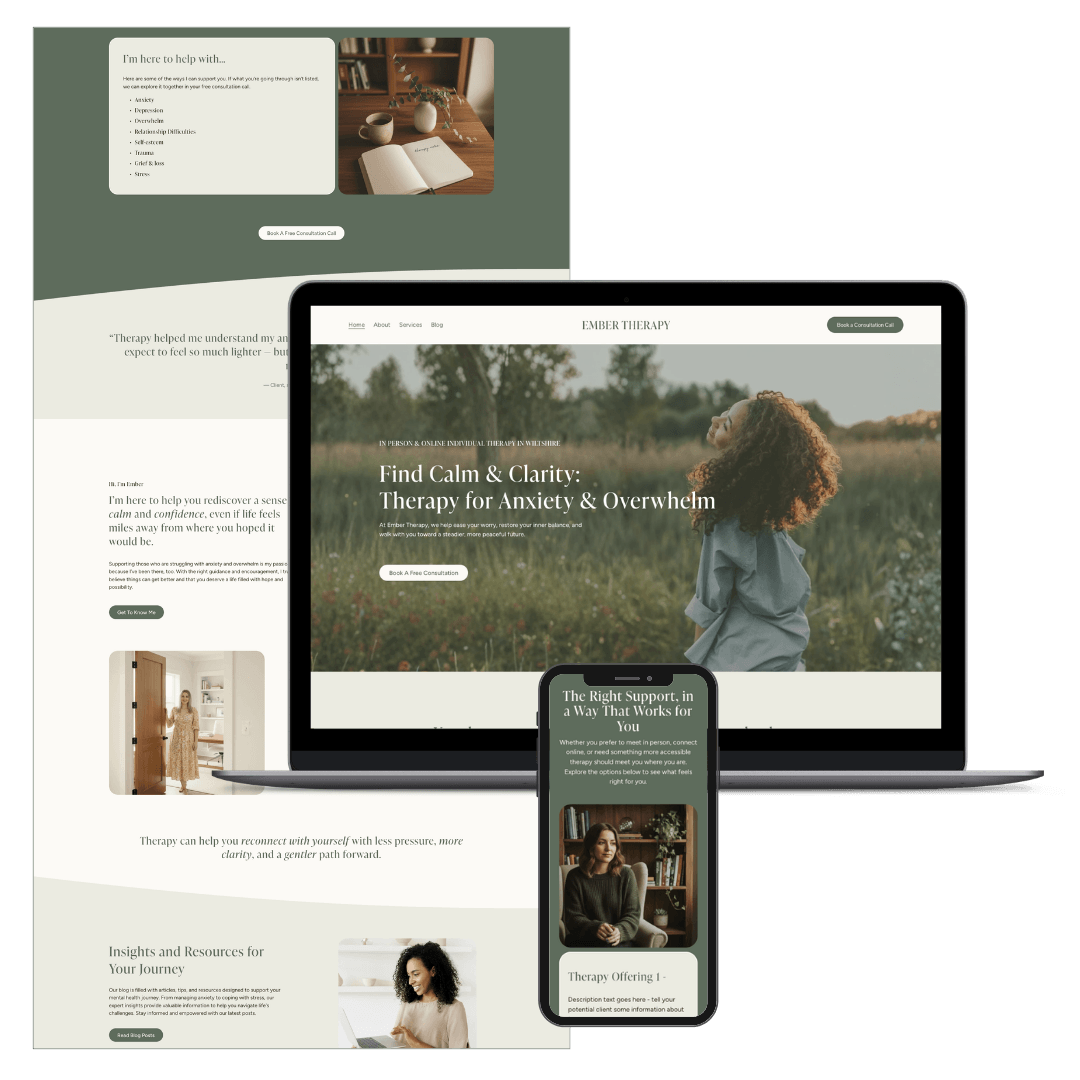
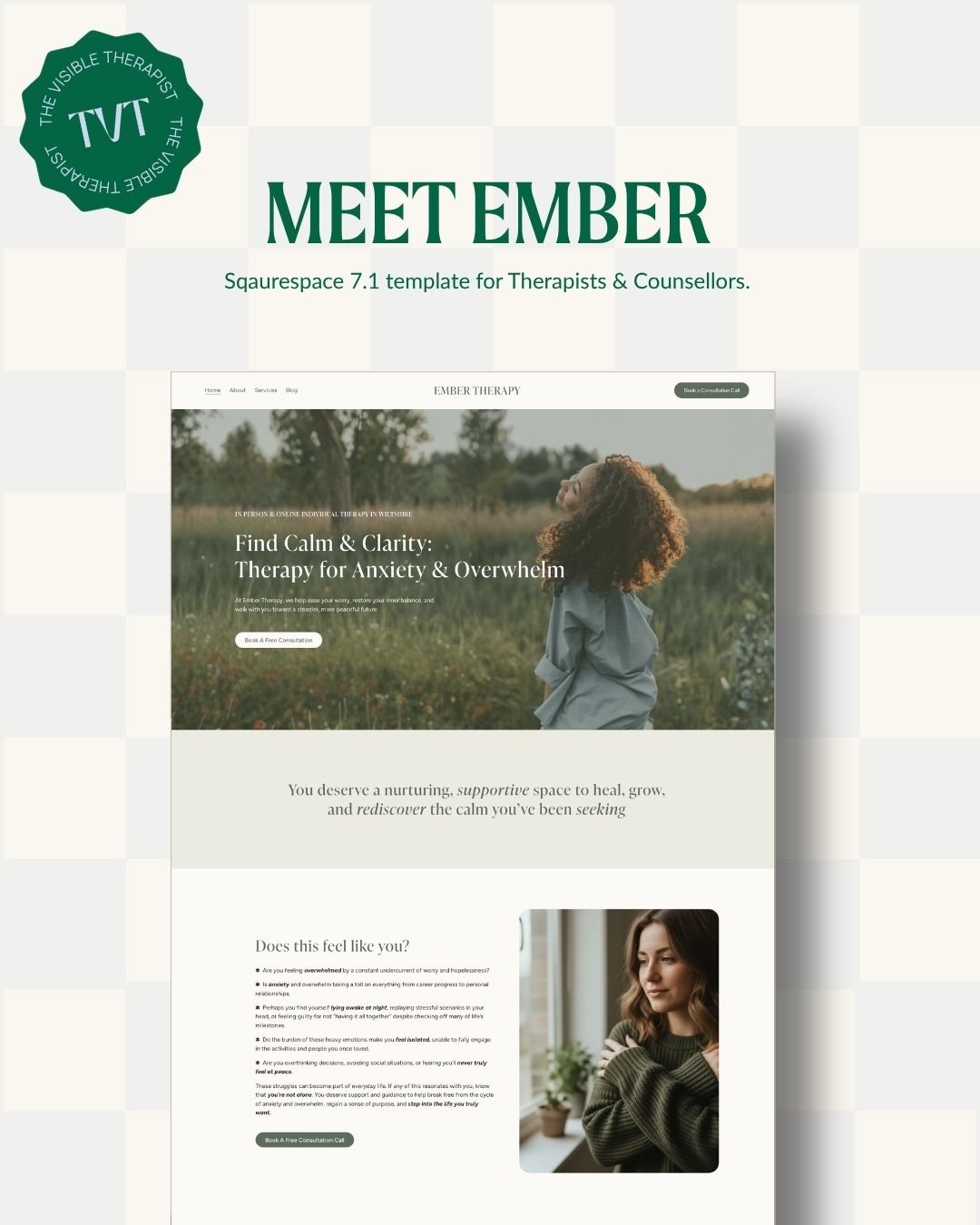
Ember Therapy Template
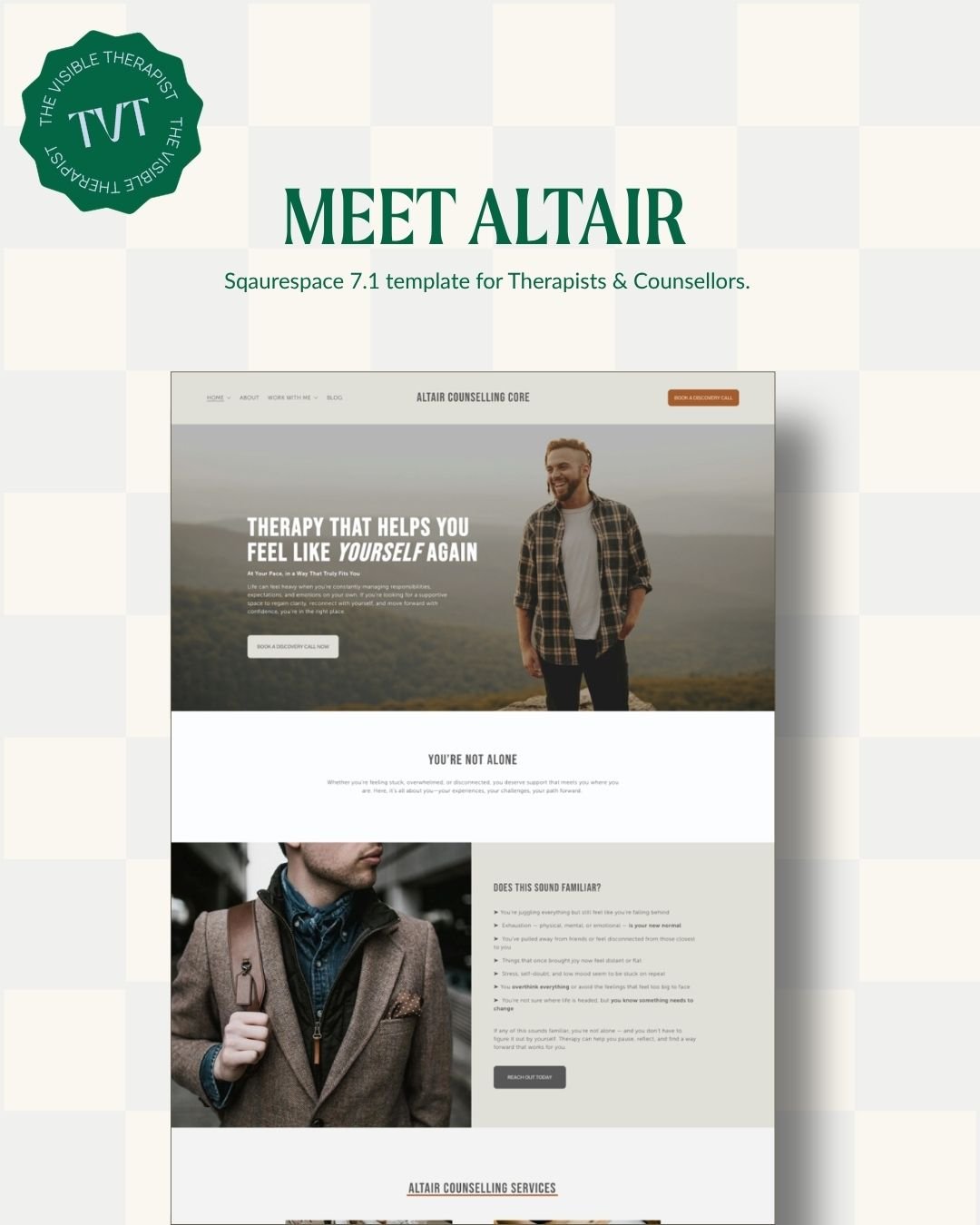
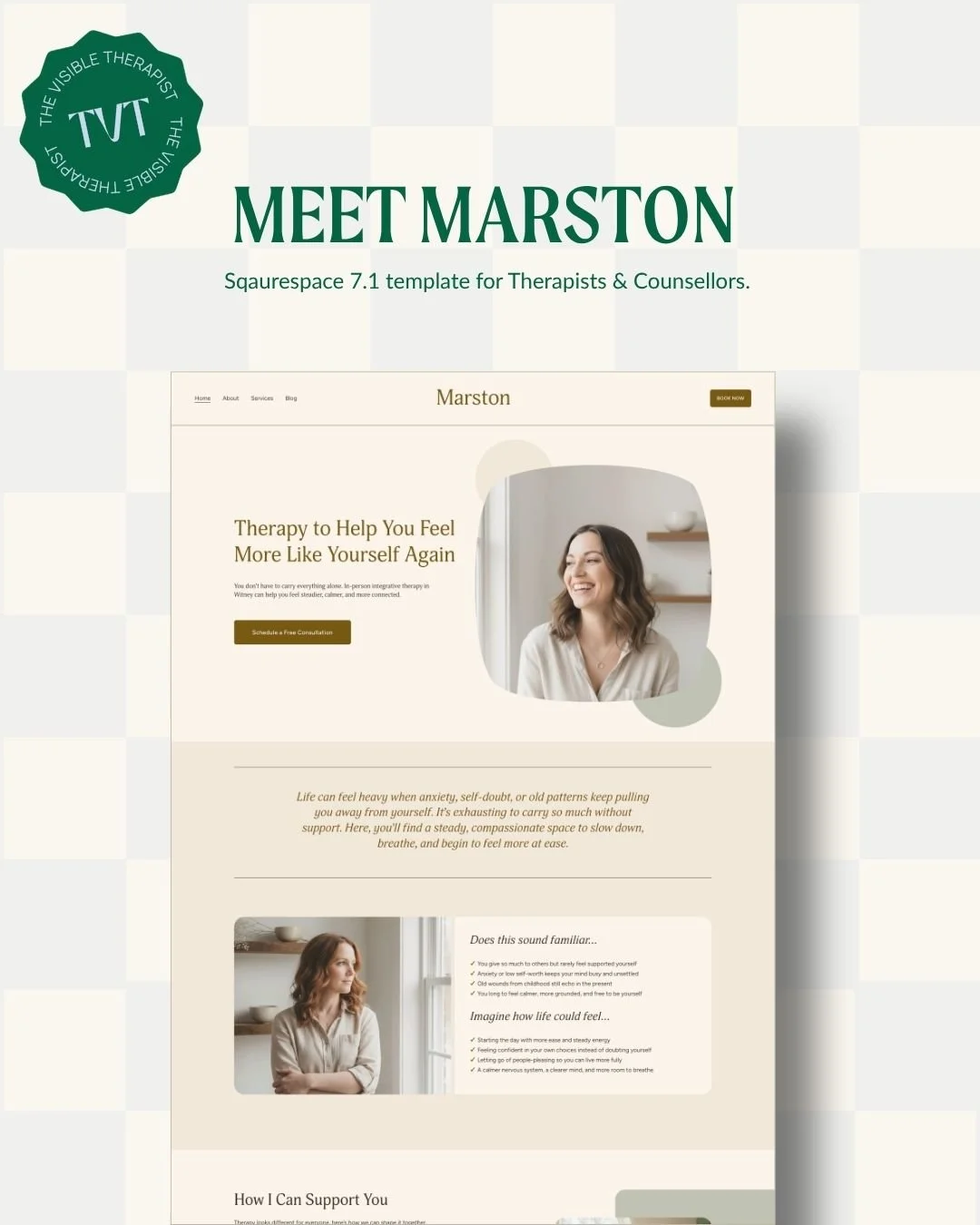
My Therapist Website Templates give you a professionally designed Squarespace starting point, so you're not faced with a completely blank website.
You'll still need to add your own content and make the website yours, but you can begin with an existing design rather than trying to figure out the entire layout yourself.
Browse the therapist website templates and take a look at the demos to see which design feels right for your practice.
And remember, your website doesn't need every possible page.
It needs to help the right people understand what you offer, get a sense of who you are and know what to do next.
About Vicky | The Visible Therapist
Hi, I'm Vicky, the person behind The Visible Therapist. I help therapists create websites that look professional, communicate what they offer clearly and make it easier for potential clients to decide whether they're the right fit.
With a background in private practice and website design, I understand both sides of the process. Through my Squarespace website templates, design services and practical advice, I help therapists create websites that feel like them and work for the people they're trying to reach.

For more web design inspiration and marketing tips, follow @thevisibletherapist